

Vietnam E-Visa for Gambian Citizens 2026: The Only Guide You Actually Need
The vietnam visa for Gambian citizens in 2026 is one of those things that looks straightforward until it isn’t — and for travelers departing from Banjul, where your connecting options are limited and a missed flight carries consequences that ripple across days, not just hours, getting it wrong is not an option. I’ve spent over two decades watching people from across West Africa arrive at check-in desks with outdated information, rejected applications, or names on their visa documents that don’t match their passports. Every single one of those situations was preventable. This guide exists so that none of them happen to you.
Vietnam has been pulling more interest from West African travelers year by year, and Gambians — a passport-holding population shaped by Arabic Muslim naming traditions, British colonial administrative history, and the extraordinary linguistic diversity of Mandinka, Wolof, Fula, and Jola — bring a specific set of naming quirks that the Vietnam e-visa portal is not designed to handle gracefully. We’re going to go through all of it. But first, the single most important thing you need to understand before anything else:
The old Visa on Arrival approval letter system is completely dead. Finished. If any website is telling you to pay a service fee, wait for an “approval letter,” and queue for a stamp on landing — that website is giving you 2019 information in 2026, and acting on it will get you denied at check-in. The 90-day Vietnam E-visa, applied for entirely online and delivered digitally to your inbox, is the only legitimate tourist entry document this year. One system. No exceptions.

Vietnam E-Visa for Gambian Citizens 2026: The Only Guide You Actually Need
Table of Contents
Vietnam E-Visa Requirements for Gambian Citizens
The vietnam visa for Gambian citizens runs through Vietnam’s official e-visa portal, and the requirements are clean and manageable. The complexity, as I’ll explain in detail, lives entirely in how you fill in the form — not in what documents you need.
Your Gambian passport must be valid for at least 6 months beyond your intended arrival date in Vietnam. Check this before you book anything. If your passport expires within eight months of your intended departure, renew it first. Airlines verify this at check-in, not just immigration on arrival.
Documents required for your e-visa application:
- Valid Gambian passport (6+ months validity beyond Vietnam arrival date)
- Passport-style photo: white background, full face, no headgear, taken within the last 6 months
- High-resolution scan or clear photograph of your passport’s biographical data page
- Intended Vietnam entry and exit dates
- First night accommodation address in Vietnam (hotel name and street address)
- Valid credit or debit card for the application fee
Standard processing takes 3 business days. Once approved, your e-visa arrives as a PDF by email. Vietnam accepts it on your phone or as a printout — both work at immigration. The 90-day validity covers tourism and business, with single-entry and multiple-entry options available. If your itinerary takes you across into Cambodia or Laos at any point, choose multiple-entry from the start.
Denied Boarding at BJL: What Happens When Your Visa Isn’t Ready
Banjul International Airport (BJL) — sometimes called Yundum — handles this country’s entire international flight traffic. There are no alternatives. No second airport an hour’s drive away, no domestic connection to another hub. If your departing flight out of Banjul is missed or you’re denied boarding, you are not catching the next one this afternoon. You are waiting days, rescheduling connections through Brussels or Casablanca or Doha, and watching an entire Vietnam itinerary collapse like dominoes.
This is the context in which I need you to understand what happens when someone arrives at BJL check-in with a visa problem.
The scene is familiar: traveler at the counter, passport out, flight to Hanoi or Ho Chi Minh City through an international hub, excitement they’ve been building for months. The agent pauses. Looks at the screen. Looks back at the passport. “We can’t see an approved e-visa for your name.” Or: “The name on your visa doesn’t match your document.” There is no Vietnamese embassy in Gambia to call — the nearest Vietnamese diplomatic representation is in countries like Nigeria or Morocco, thousands of kilometres away and completely useless for a same-day crisis.
Our Super Urgent Visa Service was built for exactly this moment. If your e-visa application was rejected, contains a name error, or hasn’t been approved yet and your flight is looming, our emergency team can push a new clearance through priority channels in 2 to 4 hours. Call us the instant trouble appears. Given what’s at stake at BJL, where there is no backup plan, acting immediately is everything.
💡 Expert Insight from Stanley Ho: “Over my 20+ years handling travel logistics, the most frequent disruption occurs at the check-in desk due to simple application formatting errors. If you are stuck at the airport and denied boarding, don’t panic—our emergency team can secure a new E-visa clearance through priority channels within hours, saving your flight.”
Apply for your Vietnam visa for Gambian citizens at minimum 7 to 10 days before departure. Not 3 days before, not the night before. Ten days. The standard 3-business-day processing is reliable, but you need the buffer to identify and correct a rejection before it becomes a crisis with no solution.
The Gambian Passport Trap: When Arabic Names Meet a Western Portal
This is the section I wrote specifically for Gambian travelers, because this is where applications fall apart — not because of anything wrong with the traveler’s documents, but because of a fundamental mismatch between Gambia’s naming traditions and what the Vietnam e-visa portal expects to see.
The Gambia is a predominantly Muslim country, and the majority of Gambian names have Arabic roots that have been absorbed and adapted over centuries through Mandinka, Wolof, Fula, and Jola linguistic traditions. The result is a naming system that looks familiar on the surface — Islamic names, clearly recognizable — but which carries phonetic adaptations, spelling variants, and structural patterns that automated visa systems consistently misread.
The Spelling Variation Problem
The most common passport trap for Gambian travelers is the gap between the Gambian-specific spelling of a name on the passport and what a system expects based on standard Arabic romanization. The name Muhammad, for example, appears in Gambian passports and IDs as Momodou, Mamadou, Modou, or even Muhamadou — reflecting how Mandinka and Wolof phonology has shaped the Arabic original over generations. Fatimah becomes Fatoumatta or Fatou. Ibrahim becomes Ebrahim or Ibrahima. Aminata, Bintou, Isatou, Mariama, Saikou, Ousman — all common Gambian given names that carry their own specific spellings firmly embedded in official documents.
The problem is not that these spellings are unusual. The problem is that many online systems — including the Vietnam e-visa portal — use name-matching against Arabic or English databases that expect Muhammad and flag Momodou as a potential anomaly. Worse, some portal users try to “correct” their name to match what they think the system wants, entering Muhammad when their passport clearly says Momodou. That correction creates a mismatch that will be flagged by Vietnamese immigration, because your e-visa and your passport will tell two different stories.
The rule is absolute and simple: enter your name exactly as it is printed in your passport. Not how you think it should be spelled. Not the standard Arabic form. Not what your name “really is.” Whatever your Gambian passport says, letter for letter — that is what goes into the Vietnam e-visa portal.
The First Name / Last Name Field Confusion
Gambian names frequently use a structure where the given name comes first and the family or clan name follows, in line with both West African and Anglophone naming conventions inherited from British administrative practice. A passport might read: Lamin Ceesay or Aminata Jallow or Ousman Touray. For these, the mapping is clean: given name into the First Name field, family name into the Last Name field.
However, some Gambian passports show names that run across all available fields in an unusual way when processed through the biographical data page’s machine-readable zone. Compound given names — names like Fatoumatta Binta where both components are given names — sometimes appear concatenated or reordered in the machine-readable data. There are also cases where a person is widely known by a single-element name (just Fatoumatta, just Momodou) with the family name filling the remaining field. Always check: the two lines of small all-caps text at the bottom of your passport’s photo page is your definitive authority. Whatever format those two lines show — that is how your name must appear on the e-visa application.
The Headgear Photo Rule
One more item specific to Gambian and Muslim travelers broadly: passport photos taken with head coverings. Vietnam’s e-visa portal follows the same rule as most international visa photo systems — headgear is not accepted in photos unless it is worn for religious reasons, in which case it must not obscure any part of the face. For female applicants who wear hijab, a photo showing the full face with hijab covering the hairline and neck but not any facial feature is acceptable. A niqab covering the face or nose is not. This trips up applications more than you might expect — take the photo correctly the first time, because a rejected photo means a rejected application, and a rejected application means you’re in emergency territory.
Skip the Queue: VIP Fast-Track at Vietnam’s Airports
Getting from Banjul to Vietnam is not a casual flight. You’re routing through at least one — more likely two — international hubs: Brussels, Casablanca, Dubai, Doha, or Istanbul are common transfer points, depending on your carrier. By the time you land at Tan Son Nhat International Airport in Ho Chi Minh City (SGN) or Noi Bai in Hanoi (HAN), you’ve been traveling anywhere from 18 to 30 hours. The last thing anyone needs is to spend another 45 minutes standing in a packed immigration hall.
VIP Airport Fast-Track solves this entirely.
A personal concierge meets you at the aircraft gate before the general terminal flow begins, guides you directly through the diplomatic and priority immigration channel, and has your documents processed ahead of everyone else. You’re typically through immigration and into arrivals within 15 to 20 minutes of landing. After a Banjul-to-Vietnam journey, that’s not a luxury — it’s sanity.
The service is available at Noi Bai International Airport (HAN) in Hanoi, Tan Son Nhat International Airport (SGN) in Ho Chi Minh City, and Da Nang International Airport (DAD). Well worth adding to your booking when you’re already investing in a transcontinental trip.
How to Apply for Your Vietnam E-Visa in 2026
The application is fully online and takes around 20 minutes when your documents are ready. Here’s the exact sequence:
Step 1: Go to Vietnam’s official e-visa portal or apply through a trusted service like VisaOnlineVietnam.com, which provides application review, name-entry checking, and human support throughout.
Step 2: Fill in your personal details. This is where Gambian applicants must be most careful. Read the naming section above before touching any name field. Enter your name exactly as it appears in your passport — in the precise spelling shown there, not a standardized or corrected form. Date of birth, passport number, and expiry date exactly as printed.
Step 3: Upload your photo and passport data page scan. White background, full face, no obscuring headgear. For religious head coverings, ensure the full face is clearly visible. A blurry or poorly lit image will trigger a rejection — take this step seriously.
Step 4: Enter your Vietnam travel details — intended entry date, exit date, and your first night’s accommodation address in Vietnam.
Step 5: Pay the application fee by credit or debit card. Major international cards are accepted.
Step 6: Submit and await processing. Standard: 3 business days. Urgent processing is available if your departure is close and you need faster clearance.
Step 7: Receive your approved e-visa PDF by email. Save it to your phone and optionally print a copy. Vietnam accepts both at immigration. You are ready to travel.

Frequently Asked Questions
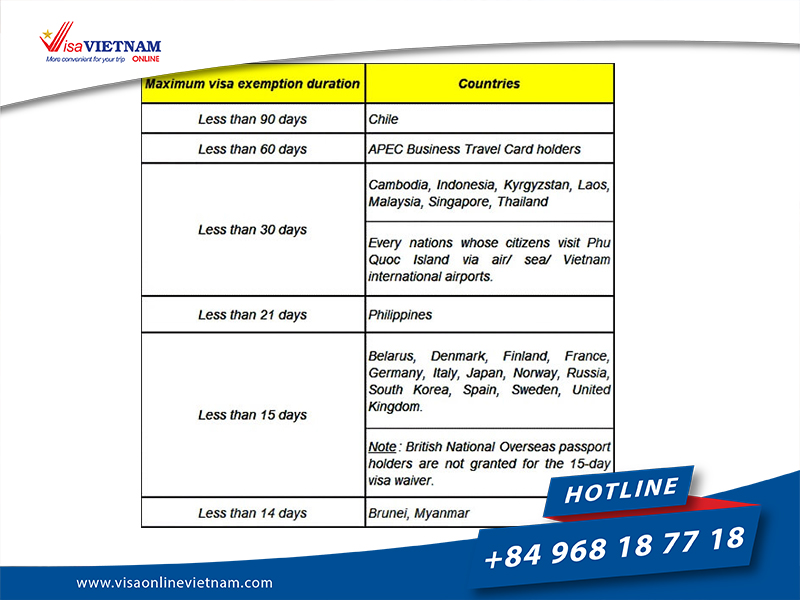
Do Gambian citizens need a visa to enter Vietnam in 2026? Yes. Gambia is not on Vietnam’s visa exemption list, so a valid Vietnam E-visa is required for all Gambian passport holders visiting Vietnam, regardless of the purpose or length of stay. The 90-day e-visa applied for online is the correct and only valid tourist entry document in 2026. The old Visa on Arrival approval letter system is completely obsolete and cannot be used.
My name on my Gambian passport is spelled differently from the standard Arabic form — which spelling do I use? Always use the spelling exactly as it appears in your Gambian passport. If your passport says Momodou, you enter Momodou — not Muhammad, not Mohammed. If your passport says Fatoumatta, you enter Fatoumatta. Any attempt to “correct” the spelling to match what you think the system expects will create a name mismatch between your e-visa and your passport, which Vietnamese immigration will flag. The passport is the authority. Follow it precisely.
Is there a Vietnamese embassy in Gambia where I can apply for a visa in person? No. There is no Vietnamese embassy or consulate in The Gambia. The nearest Vietnamese diplomatic representations are in countries like Nigeria or Morocco. This is exactly why the online e-visa system matters so much for Gambian travelers — it allows you to apply from Banjul, Serekunda, Brikama, or anywhere else in the country without needing to travel abroad for a visa. Apply online well in advance of your trip.
How long is the Vietnam E-visa valid for Gambian passport holders? The standard e-visa grants 90 days from your date of entry, with single-entry or multiple-entry options. For a trip of that length, most Gambians traveling to Vietnam for tourism will comfortably cover their entire itinerary, including possible side trips to neighboring countries like Cambodia or Laos, under one multiple-entry e-visa.
What if my e-visa application is rejected close to my departure date from Banjul? Contact our emergency visa service immediately — do not wait. Our Super Urgent Visa Service can process a new e-visa clearance through priority channels in 2 to 4 hours. Given that Banjul International Airport is the only international airport in The Gambia and missed connections carry severe ripple effects, acting the moment you see a problem is not optional. The sooner you contact us, the more options we have to rescue your trip.
About the Reviewer: Stanley Ho is the CEO of VisaOnlineVietnam and a recognized expert consultant in the international aviation and travel service industry. With decades of experience navigating complex immigration regulations, Stanley and his team specialize in providing seamless visa solutions, fast-track airport services, and emergency travel assistance for global citizens visiting Vietnam.


