
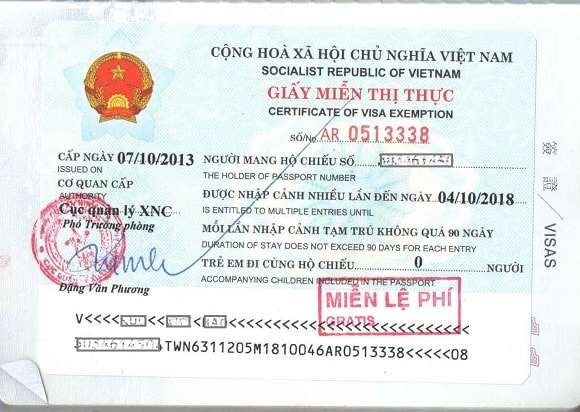
Vietnam E-Visa for UAE Citizens 2026: The Only Guide You Actually Need
If you’re researching the Vietnam visa for UAE citizens in 2026, you’re already ahead of the crowd — because a surprising number of Emirati travelers still show up at DXB with expired information, outdated assumptions, and sometimes no visa at all. Vietnam is having a serious moment right now. Hanoi’s Old Quarter at dusk, banh mi from a street cart in Hoi An, the sweeping rice terraces of Sapa — the country has never been more accessible or more worth your time. But the entry process has changed significantly, and if you’re still reading old guides that mention “visa on arrival approval letters” as a valid option, do yourself a favour: close those tabs now.
The good news? Getting into Vietnam from the UAE in 2026 is genuinely straightforward — if you know exactly what you’re doing. The 90-day e-visa has become the single standard entry route for Emirati passport holders, and when the application is done correctly, approval comes fast. The confusion starts when travelers don’t prepare properly, or when they copy-paste their name from WhatsApp instead of their passport. I’ve seen it too many times.

Vietnam E-Visa for UAE Citizens 2026: The Only Guide You Actually Need
Table of Contents
Vietnam E-Visa Requirements for UAE Citizens
The Vietnam e-visa for UAE citizens is valid for up to 90 days and comes in two flavours: single entry and multiple entry. Both are issued entirely online — there’s no embassy queue, no courier, no visa sticker in your passport. You get a PDF. You print it (or save it to your phone as backup, though printed copies are the official requirement). Done.
Here’s what you need before you start:
- Valid UAE passport — minimum 6 months validity beyond your intended entry date into Vietnam, plus at least 2 blank visa pages
- Passport bio-page scan — clean JPEG, clearly readable, no glare
- Passport-style photo — recent, white background, 4×6 cm, no glasses
- Entry and exit ports — the e-visa names specific entry/exit checkpoints; entering through a different airport means refused entry, full stop
- Credit or debit card for payment
Processing time on the official portal runs about 3 business days for standard applications. Urgent processing is available through authorized service providers and can compress that window dramatically — more on that below. The single-entry fee is USD 25 (approximately AED 92); multiple entry is USD 50 (around AED 184). Fees are non-refundable even on rejection, so get the application right the first time.
One important seasonal note: the e-visa portal pauses processing during Vietnam’s Tết (Lunar New Year) holiday. In 2026, that window ran February 14–22. If your trip falls near any major Vietnamese public holiday, build in extra lead time — at least 10–15 working days.
Denied Boarding at DXB: What Happens When Your Visa Isn’t Ready
Picture this. Dubai International Airport, Terminal 3, Emirates check-in. You’re flying EK392 to Ho Chi Minh City — SGN — boarding in three hours. You pull up your email to show the agent your e-visa, and it’s not there. Either the application was rejected, or processing stalled, or — worse — you entered your passport number with a single transposed digit and the visa came back with someone else’s details. The agent shakes her head. You’re not getting on that flight.
This happens more than people want to admit. And at DXB, one of the busiest international airports on the planet, there’s no “just sort it out at the gate” option. Airlines don’t board passengers without valid documentation, period.
Here’s what I tell every traveler in that situation: don’t panic, and don’t start arguing with check-in staff. Call our emergency team immediately. Through priority processing channels, we can secure a fresh Vietnam e-visa clearance in as little as 2 to 4 hours — which, depending on your flight time, may be enough to get you on board. It’s our Super Urgent Visa Service, and it exists precisely because gate emergencies are real.
💡 Expert Insight from Stanley Ho: “Over my 20+ years handling travel logistics, the most frequent disruption occurs at the check-in desk due to simple application formatting errors. If you are stuck at the airport and denied boarding, don’t panic—our emergency team can secure a new E-visa clearance through priority channels within hours, saving your flight.”
The lesson here isn’t just “apply early” — it’s apply correctly. A visa application submitted two weeks out that contains errors is no better than one submitted the day before.
The UAE Passport Trap: Name Formatting Errors That Kill Applications
This is the section most guides skip entirely, and it’s the one that matters most for Emirati passport holders specifically.
UAE passports render names in Arabic script as the primary format, with an English-language romanization appearing in the machine-readable zone at the bottom of the bio page. The problem is that Arabic-to-English romanization is not standardized. The same name — say, محمد عبدالله الشمسي — might appear as “Mohammed Abdullah Al Shamsi” in your old passport and “Muhammad Abdulla Alshamsee” in your new one. Both are valid. Both are legal. And if you enter one version on your Vietnam e-visa application while your passport contains the other, your visa will be flagged.
The Vietnam immigration portal checks your e-visa against your passport’s machine-readable zone, not against what you think your name looks like. Common failure patterns I see from UAE applicants:
Al- prefix handling — Some UAE passports hyphenate tribal or family names (Al-Rashidi, Al-Mansoori), while others run them together (Alrashidi, Almansoori). The e-visa application must match the passport’s machine-readable zone exactly.
Double-barrel Arabic names — UAE passports often carry a full chain: personal name, father’s name, grandfather’s name, family name. The e-visa form has limited character fields. Truncation is common, and how you truncate matters.
Feminine suffix variations — Names ending in -a or -ah (Fatima vs. Fatimah, Mariam vs. Maryam) get romanized differently depending on which UAE emirate issued the passport and when.
My standard advice: open your passport to the bio page right now. Read the name exactly as it appears in the bottom machine-readable strip — those two lines of capital letters and chevrons. That is the version you type into the e-visa form. Not your name on your Emirates ID. Not the way you sign your emails. The machine-readable strip.
Skip the Queue: VIP Fast-Track at Vietnam’s Airports
For UAE travelers accustomed to the speed and polish of DXB or AUH, standard arrival queues at Vietnamese airports can come as a shock. Noi Bai International in Hanoi (HAN) and Tan Son Nhat in Ho Chi Minh City (SGN) handle enormous passenger volumes, and during peak travel windows — think Tet recovery weeks, Chinese Golden Week overflow, and the October–November high season — immigration queues can stretch to 90 minutes or more.
There’s a legitimate solution for this: VIP Airport Fast-Track. The service gives you access to priority immigration lanes, a personal concierge who meets you at the gate or the aircraft door, and dedicated assistance through customs. You walk past the standard queue entirely. It’s available at all three of Vietnam’s major international gateways: Noi Bai (HAN), Tan Son Nhat (SGN), and Da Nang International (DAD).
For business travelers flying in for a two-day meeting, or families with young children, or anyone who simply values their time, Fast-Track is a sensible investment. It’s not a luxury add-on — for the right trip, it’s just efficient planning.
How to Apply for Your Vietnam E-Visa in 2026
The application process itself is clean when you do it right. Here’s the step-by-step:
- Go to the official Vietnam immigration portal at evisa.gov.vn, or use an authorized service provider like VisaOnlineVietnam if you want document verification support before submission
- Fill in your personal details — and here I’ll repeat myself: copy from the machine-readable zone of your passport, not from memory
- Choose your entry type — single entry (USD 25) for a one-way trip; multiple entry (USD 50) if you’re doing regional hops that bring you back to Vietnam
- Select your entry and exit ports — pick the airports you actually plan to use; changing these later requires a new application
- Upload your passport bio-page scan and your photo — blurry images and selfies against a patterned wall are the two most common reasons for instant rejection
- Pay the fee by credit or debit card; the portal accepts Visa, Mastercard, and several other networks
- Receive your approval PDF by email — standard processing takes 3 business days; urgent service through a provider can deliver in 2–4 hours
- Print your e-visa — at least one hard copy for check-in, one as backup; Vietnam’s immigration counters officially require printed documentation
That’s it. No embassy visit. No courier. No waiting in a consular queue. The entire vietnam visa for UAE citizens process, from opening the application to receiving your approval, can happen in under a week on standard processing or in a single working day on urgent.
Frequently Asked Questions
Can UAE citizens get a visa on arrival in Vietnam in 2026?
The old “visa on arrival approval letter” system — where you paid a service provider to arrange a letter from Vietnam Immigration and then collected a stamp at the airport — is completely dead. That system was already being phased out before 2025, and it is no longer a recognized entry route. The Vietnam e-visa, applied for online in advance, is the correct and only standard method for UAE passport holders in 2026. Anyone still selling “VOA approval letters” is selling you access to an obsolete process.
How long is the Vietnam e-visa valid for UAE citizens?
The Vietnam e-visa for UAE citizens is valid for up to 90 days, counted from your approved entry date. It comes in single-entry and multiple-entry versions. Note that the e-visa cannot be extended once you’re inside Vietnam — if you want more time, you must exit and apply fresh, or convert to a different visa category through a licensed Vietnamese agency while you’re in-country.
What if my name on the e-visa application doesn’t match my passport exactly?
This is a hard stop at immigration. Even minor discrepancies — a missing hyphen, a different vowel in the romanization, a truncated surname — can result in entry refusal. If you catch the error before travel, submit a correction or a new application immediately. If you’re already at the airport, contact our emergency team. Do not board thinking the officer will overlook it; they won’t.
Is the Vietnam e-visa accepted at all airports and entry points?
The e-visa is accepted at all international airports in Vietnam, including HAN, SGN, and DAD, as well as at designated land border crossings and seaports. However — and this matters — the e-visa document itself specifies your entry and exit ports. If your visa says you’re entering at SGN and you try to enter at HAN, you will be refused. Confirm your routing before you submit.
Can I extend my stay in Vietnam beyond the 90-day e-visa period?
Technically yes, but it requires action before your visa expires. You can apply for an extension through a Vietnamese immigration office or a licensed agency while you’re in-country, or exit and re-enter on a new e-visa. The blanket extension process has improved, but it’s still not guaranteed and takes time. If you know your trip will run longer than 90 days, plan for this before you leave the UAE — not after you’ve arrived.
About the Reviewer: Stanley Ho is the CEO of VisaOnlineVietnam and a recognized expert consultant in the international aviation and travel service industry. With decades of experience navigating complex immigration regulations, Stanley and his team specialize in providing seamless visa solutions, fast-track airport services, and emergency travel assistance for global citizens visiting Vietnam.


